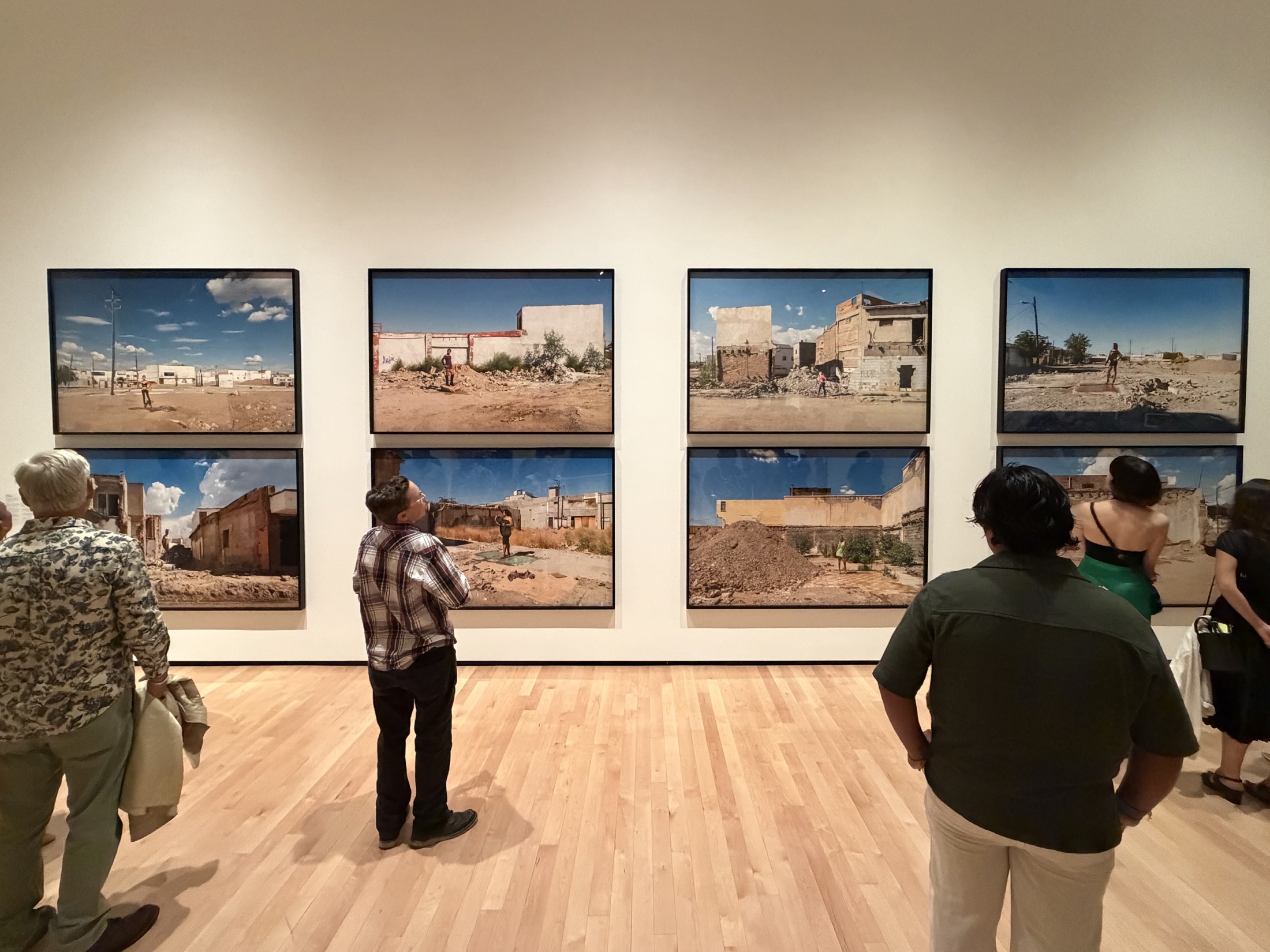
Installation view of Visiones Nocturnas: Queer Nightlife in Contemporary Art at MCASD La Jolla. Photo: Sisif J. Patrick.
The Party and the Wake
Visiones Nocturnas: Queer Nightlife in Contemporary Art, Museum of Contemporary Art San Diego (La Jolla), through January 17, 2027
MCASD fills its La Jolla galleries with queer nightlife's floors, curtains, and disco balls. The best objects in the building are holding a funeral.
I saw Visiones Nocturnas: Queer Nightlife in Contemporary Art at its preview party, the night before the Museum of Contemporary Art San Diego opened it to the public, and before anything else, the brave thing should be said, because it is brave: mounting an exhibition of queer Latine nightlife in La Jolla — as conservative a stretch of coast as Southern California offers — in the political temperature of 2026 is a real act with real cost. MCASD chose a side, publicly, in its wealthiest neighborhood's front parlor. That deserves plain credit, and the rest of this review exists because of it: respect for the mission is precisely why the methods deserve a serious look.
The facts, then. A show about the night, viewable eleven to five once the doors open; the living version of its subject operating a few miles south, tonight, music included. Thirteen Latine and Latin American artists, the 1990s to now, curated by Amy Crum, the title borrowed from Andres Payan Estrada's decade of border-nightlife research. The framing throughout promises resilience and exuberance rather than loss. I spent two hours among objects that kept disobeying it: the museum is holding a wake and calling it a party, and the show is best exactly where it stops pretending otherwise.
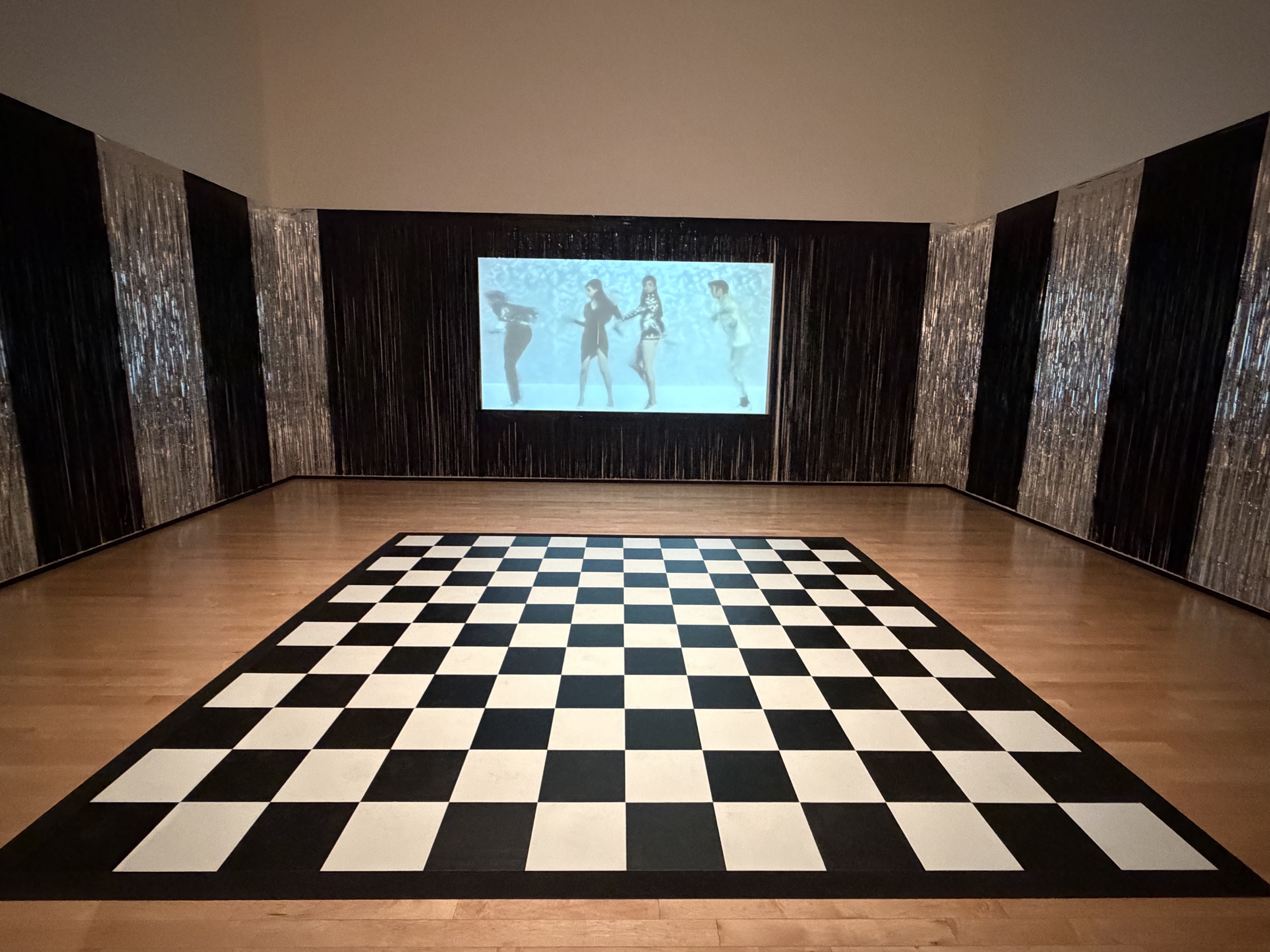
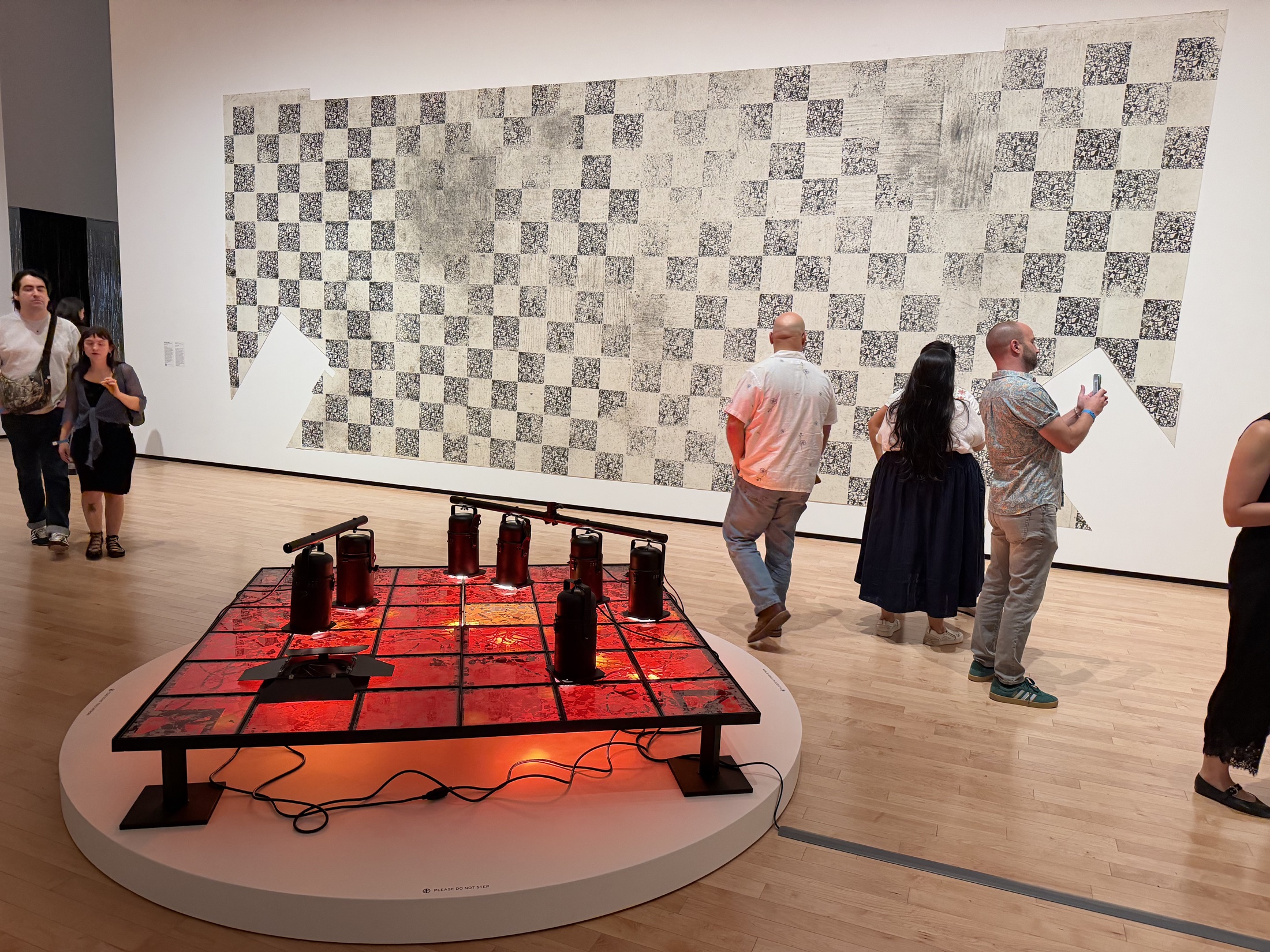
The standard for all of this was set in 1991, and both of the exhibition's anchor rooms work in its shadow, knowingly or not. Félix González-Torres's "Untitled" (Go-Go Dancing Platform) — a pale blue stage rimmed with forty-eight lightbulbs, on which a dancer in silver lamé appears once a day, unannounced, for five minutes, dancing to music only they can hear — was conceived months after the artist's partner died of AIDS. Joy performed inside mourning, for nobody, on a schedule you will probably miss; the work is mostly an empty platform and your waiting. His curtains were walked through; his candy spills were eaten down like a body losing weight. Depth, in that vocabulary, was a transaction: something given, something taken, something risked. Visiones Nocturnas borrows the props — the curtains, the glitter fields, the platforms, the lightbulbs — and cancels the transaction. Martine Gutierrez's room dresses the walls in party-store tinsel, the silver fringe you'd tape up for a backyard birthday, and lays a pristine checkerboard dance floor before her 2012 video Clubbing, in which every dancer in the club is Gutierrez herself. A placard extends the museum's invitation: we welcome you onto the dance floor to move along. Move along to what? The gallery is silent; the music arrives by QR code; the four Martines on screen were filmed thirteen years ago and cannot see you. I watched visitors consider it and decline. One room over, the show's most honest pairing of signs: Jesús Hilario-Reyes's Nowadays, the actual vinyl floor of the New York club where they held a DJ residency, scuffed by an actual queer congregation, hangs on the wall behind the instruction please do not step. Dance on the replica; venerate the relic. And the relic, hung upright like a tapestry, quietly loses the thing it archives — turned vertical, a floor sheds its dancers; nobody the scuffs remember could stand on it now. It would have been braver flat on the ground, where floors live and museums fear.
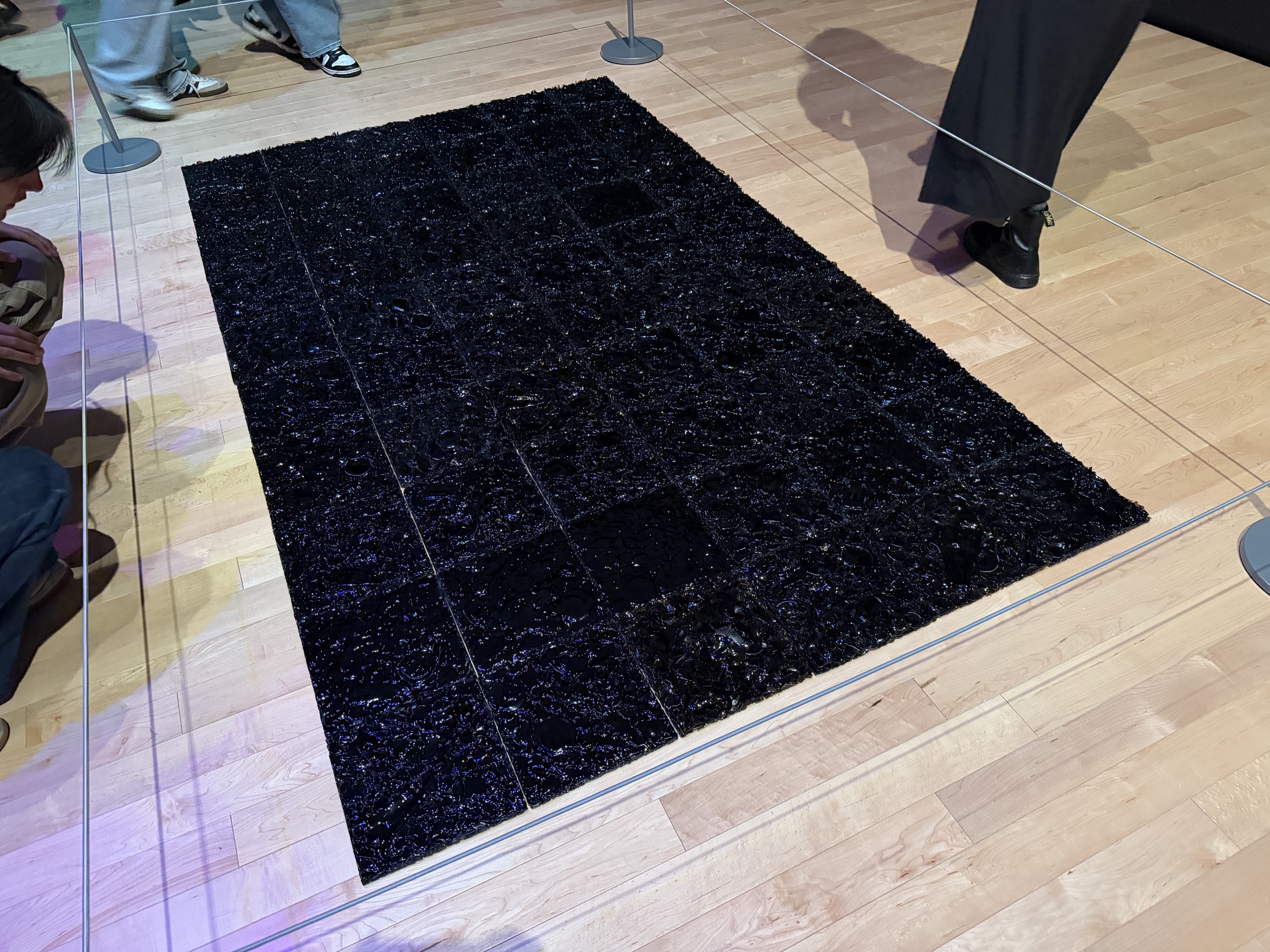
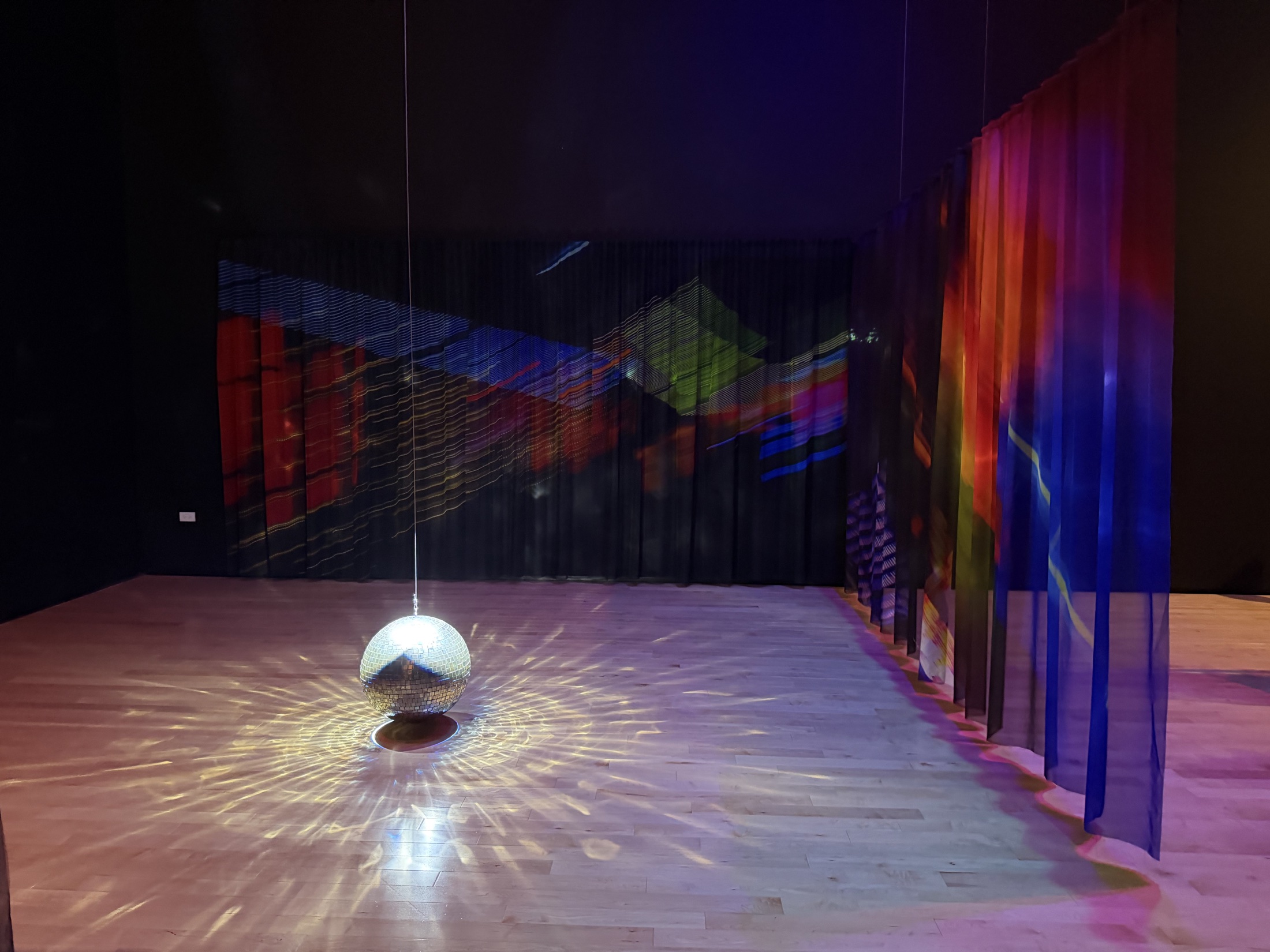
Payan Estrada, the show's namesake, gets the wake half right. His sheer curtains print long exposures of border-town clubs, though unlabeled they read as hanging dresses — this is an exhibition where meaning arrives by caption, and I kept wondering whether I was allowed to feel anything before reading. His field of roughly six hundred broken bottles, collected from LGBTQ+ bars between Juárez and Tijuana, is the strongest thing he's made and the most constrained: raked flat, squared into a black grid, cordoned. González-Torres's candy asked to be taken; this glass forbids everything, including, oddly, grief's disorder. But his porcelain disco ball, lowered on its cable until it hovers an inch above the floor, needs no label at all. A disco ball at that height is a flag at half-mast. It is the show's thesis, hung correctly.
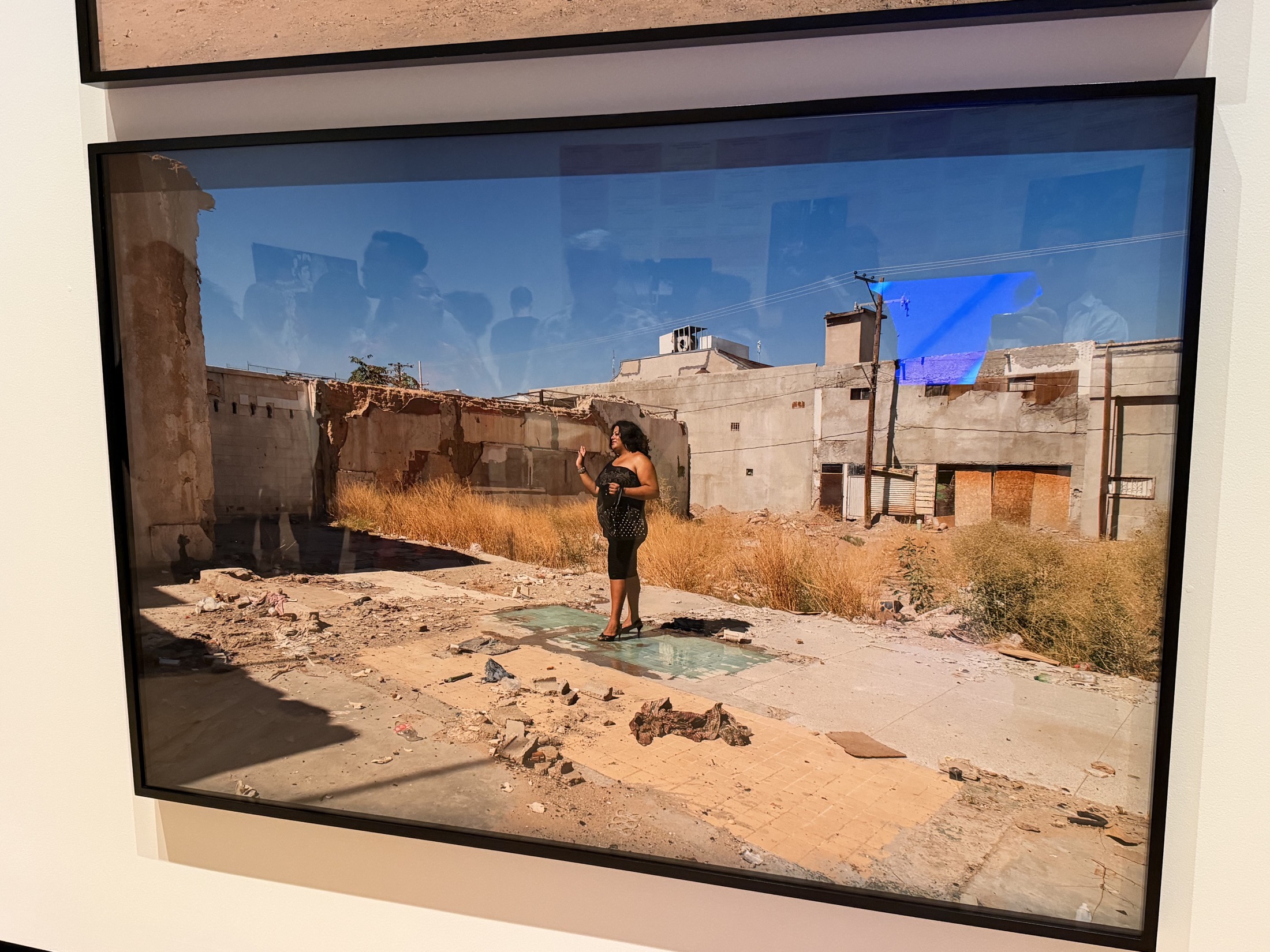
The two objects that fully earn the building both point down. Hilario-Reyes's Untitled Dancer, center of gallery: salvaged club lights — the ceiling's own apparatus — standing on a floor of stained glass, church windows laid horizontal, glowing from beneath so the light aims into the earth. The club's heaven, grounded, illuminating the direction of the dead. And Teresa Margolles's Pistas de baile photographs, in which eight trans women — Vivianne, Karla Ivonne, Galdy, Sansara, Valeria, Vanessa, Nancy, Patty — returned to the demolished Juárez nightclubs where they worked, swept the rubble back themselves, and stand in full dress on the last exposed square feet of dance floor. The label notes the city's demolition was an erasure and the women's sweeping a recovery. Small figures, vast ruins; nobody reinvigorating anything; the ground held. It is the finest work in the exhibition and it takes orders from nobody.
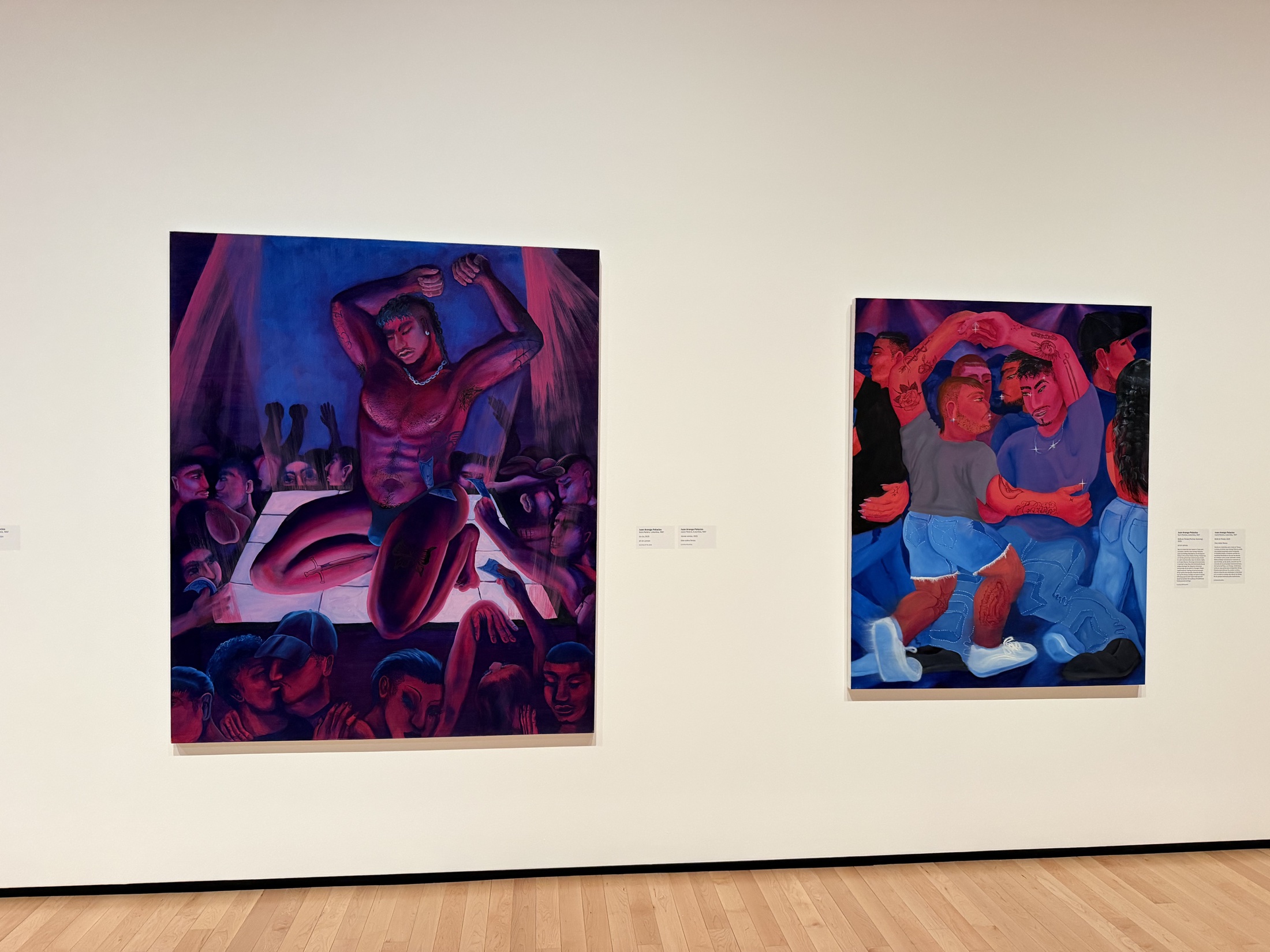
Elsewhere the show's people arrive as documentation — galleries of photographs and video, real faces from ballrooms, backyards, and punk nights — and I'll confess that almost none of them stayed with me. The evidence blurred the way a stranger's party photos do: proof that joy occurred, addressed to someone else. Juan Arango Palacios is the one who invents his people, and invention lodges. His oils repopulate the show — two men mid-turn in Baile en Pareja, a go-go dancer enthroned above his congregation of raised phones — and the label delivers the season's most affecting caption, the artist who missed the family gatherings where Latin American kids learn to dance, finally taught cumbia as an adult in Chicago's queer Pilsen. Painting plus miracle-narrating text is the exact structure of the ex-voto, and it moved me. But the distinction lives in the caption; on their own the canvases join a style the decade has made ubiquitous, tender queer figuration under club light, and I could not shake the feeling of having met them before under other names. He is here because a show of empty floors needed a congregation. Around all of it: thirteen artists, two rooms apiece for the anchors, the rest packed shoulder to shoulder, a playlist padded to album length.
So: the wake works. The party does not. A museum cannot supply the night's conditions — risk, sweat, dark, music felt in the sternum, the possibility of touching a stranger — and the attempts here produce dollar-store scenography and silent invitations to awkwardness. What a museum can do is grieve, archive, and hold ground, and the strongest artists came knowing it. The institution seems to sense it too: the preview I attended came with DJs and a few dancers billed as avant-garde — the party supplied by programming, in the one building where González-Torres would have let it appear unannounced. I left before the dancing started. Not in protest — the exhibition had simply finished saying what it had to say, and no party could add what the objects declined to offer. The real title is written in those objects: a floor that lost its dancers, a flag at half-mast, light aimed at the underworld, eight women on the last square feet. The museum closes at five. The night it eulogizes opens at nine, a few miles south, no reading required. Go to both — but know which one is the wake.